In January 2025, we surveyed 1,000 consumers around their anticipated spending and any changes due to the Trump administration’s sweeping plan for tariffs.
A little over 6 months later, we wanted to conduct a similar survey to see what’s changed, what hasn’t, and how well Americans are tracking updates around tariff rates and implementation. The results show a persistent assumption of pending economic downturn along with limited national support for tariffs – even among conservatives.
Key August 2025 Tariff Survey Findings
- 81% of Americans have noticed prices go up since January
- 32% have taken on more debt due to higher prices
- 77% are changing shopping habits due to tariffs
- 1 in 5 are currently stockpiling goods due to tariffs
- 51% are reducing spending due to tariffs
- Over 1 in 10 are confused by tariff updates “all the time”
- 51% report tariff-related anxiety
- 66% oppose tariffs, 16% support, 18% are neutral
Most Americans Say Prices are Up, Especially for Food
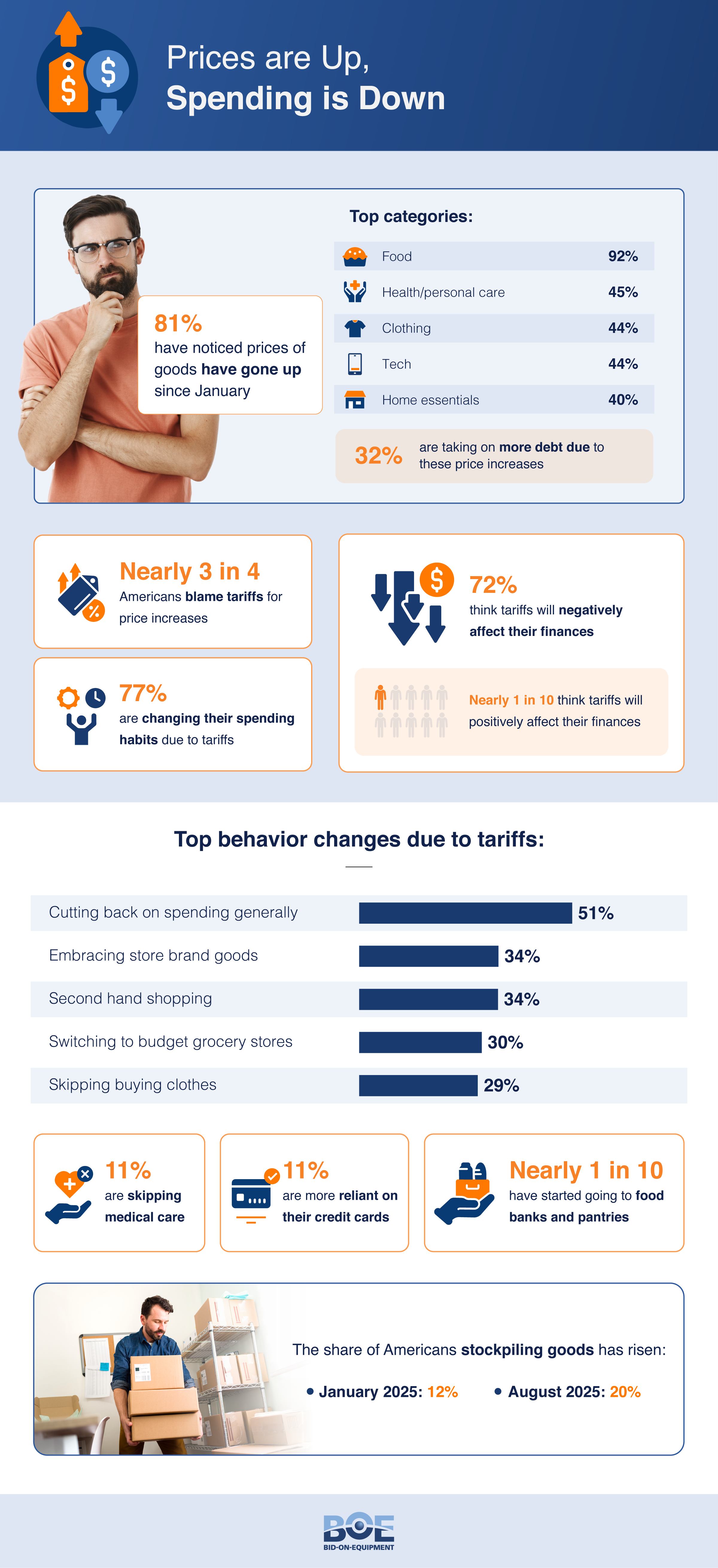
A majority of Americans say they’ve felt the sting of rising prices in 2025, with everyday essentials becoming significantly harder to afford. According to new data, 81% of U.S. adults have noticed the cost of goods increasing since January. This economic shift is changing how people eat, shop, and seek care.
No category has been spared, but food is the most glaring flashpoint. A staggering 92% of respondents say food prices have gone up, pushing many to reconsider what goes in their carts or whether they can afford a full cart at all. Health and personal care items (45%), clothing (44%), tech products (44%), and home essentials (40%) are also triggering sticker shock. For some, this is truly unsustainable: nearly a third of Americans (32%) report taking on more debt to cope with rising costs.
Tariffs Take the Blame and the Emotional Toll
When asked what’s driving the price hikes, nearly 3 in 4 Americans point to tariffs. The public perception is clear. About 72% believe tariffs will hurt their personal finances, while only a small fraction—fewer than 10%—believe they’ll offer any benefit. The economic impact is already reshaping how people live, work, and spend. More than three-quarters of respondents (77%) say they’re changing their spending behavior because of tariffs.
These behavioral shifts are in line with the survey we conducted in January.
Top Ways Americans are Changing Spending Behavior
- Cutting spending across the board (51%)
- Switching to store-brand goods (34%)
- Second-hand shopping (34%)
- Switching to budget grocery stores (30%)
- Skipping clothing purchases (29%)
Over half of Americans (51%) are cutting back on overall spending. Roughly a third have started buying store-brand products or shopping secondhand (our internal data backs that up!). A smaller but deeply concerning share report skipping medical care (11%) or leaning more heavily on credit cards (11%) to get by. Nearly 1 in 10 Americans say they’ve begun relying on food banks and pantries, a sobering indicator of financial instability creeping into the mainstream.
Stockpiling Increases with Economic Undertones
The share of Americans who say they’re stockpiling essential goods has risen from 12% in January 2025 to 20% today. This uptick suggests that ongoing changes in tariff schemes have not reassured anxiety, but given people more time to stock up.
51% of Americans Report Confusion About Tariffs
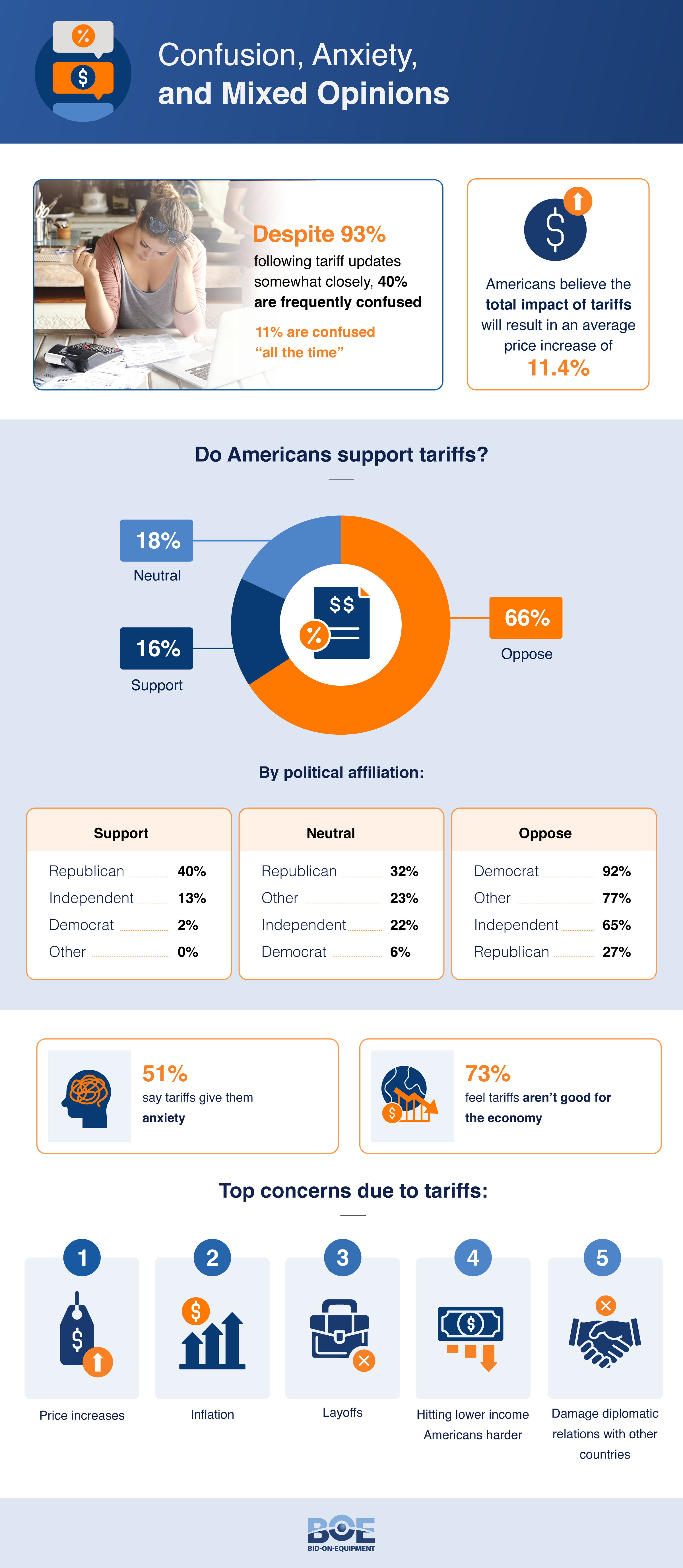
Even as headlines spotlight tariff policies, clarity remains elusive. Although 93% of Americans say they follow tariff updates at least somewhat closely, 40% admit they’re “frequently” confused. A further 11% say they’re confused all the time.
This knowledge gap has undermined consumer confidence to the point of emotional consequences. Half of the country (51%) says tariffs are a source of anxiety, a figure that underscores just how personal and emotional trade policy has become.
About 73% of Americans think tariffs are bad for the economy. The average respondent estimates tariffs will lead to an 11.4% overall price increase.
Widespread Opposition, Sharp Political Divides
Public support for tariffs is deeply fractured, and politics plays a defining role. Two-thirds of Americans (66%) oppose tariffs outright, while only 16% support them. The remaining 18% remain neutral.
By party affiliation, the split becomes even more pronounced. Among Democrats, opposition is nearly unanimous, with 92% rejecting tariffs as a good policy. Independents are also largely critical, with 65% opposed. Among Republicans, however, views are more mixed. Forty percent support tariffs, 32% are neutral, and just 27% oppose them.
Methodology & Fair Use
In August 2025, we surveyed 1,000 consumers nationwide on their spending habits around tariffs. Ages ranged from 18-75 with an average age of 45. 49% were men, 50% women, and 1% either nonbinary or chose not to disclose. 42% identified as Democrats, 28% as Republicans, 29% as Independents, and 1% as other.
For media inquiries, please contact media@digitalthirdcoast.net.
Fair Use
When using this data and research, please attribute by linking to this study and citing Bid-on-Equipment.com.